
Stainless steel planters have become a popular choice for landscaping and home decor due to their corrosion resistance, weather resistance, and long-lasting durability. Compared to traditional plastic, ceramic, or stone planters, stainless steel planter offer significant advantages in quality, safety, and customization.
In this blog, we will comprehensively analyze the pros and cons of stainless steel planters from multiple perspectives—including material selection, usage environments, maintenance, costs, and environmental recycling—to help you make the right material choice.
Why Choose Stainless Steel Planters
Material Advantages
304/316 stainless steel offers strong resistance to acid and alkali corrosion, making it suitable for salt spray and alternating hot/cold environments with a service life of over 10 – 20 years. It also provides high strength, lightweight properties and multiple finish options (brushed, painted, electroplated, etc.) to meet diverse design requirements.
Usage and Maintenance
Stainless steel planter has a smooth, easy-to-clean surface that resist algae growth. They offer safe installation (no risk of shattering), are recyclable, and deliver superior environmental performance.
Cost
In terms of cost comparison, while the initial price is higher than plastic/ceramic pots, long-term maintenance costs are lower.
Material Comparison
Among various metals, stainless steel planter boxes are favored for their unique advantages:
strong corrosion resistance and long-term rust prevention, making them particularly suitable for coastal and high-humidity environments;
robust construction and long lifespan (up to 10–20 years), ideal for applications requiring frequent watering;
and versatility in shapes and surface finishes (polished, brushed, painted, plated, etc.) to meet aesthetic demands across different situations.
In contrast, Clay/Ceramic planters are affordable but prone to breakage, with soil absorption causing winter cracking;
Plastic planters are lightweight and low-cost, but suffer from brittleness over time and poor environmental sustainability;
Galvanized/carbon steel pots are heavy with moderate cost, but prone to rusting in scratched areas;
Aluminum planter pots offer strong corrosion resistance but with high unit price and demand precise welding techniques;
| Material | Pros | Cons | Application |
| Plastic | Low price, lightweight, good water retention, easy to transport and clean | Prone to aging and fragility, with a uniform appearance, plastic pollution | Home gardening,lightweight houseplants |
| Clay/Ceramic | Breathable, natural texture, with a variety of colors | Fragile and heavy; risk of freezing and cracking in winter | Indoor flower and plant |
| Galvanized | Moderate cost; excellent corrosion resistance after coating | Prone to rust if the coating is damaged; relatively heavy; may be difficult to customize | Outdoor projects,Landscape |
| Aluminum | Excellent corrosion resistance; lightweight; low-maintenance | Higher cost; requires high-quality welding; limited color options | Coastal landscape projects, commercial spaces |
| Stainless Steel Planter Pot | Exceptional corrosion resistance; high hardness and strength; recyclable and eco-friendly; easily customizable and versatile | Higher initial cost compared to other materials; requires professional welding and surface treatment | Residential properties, hotels, commercial landscapes, flower beds, etc. |
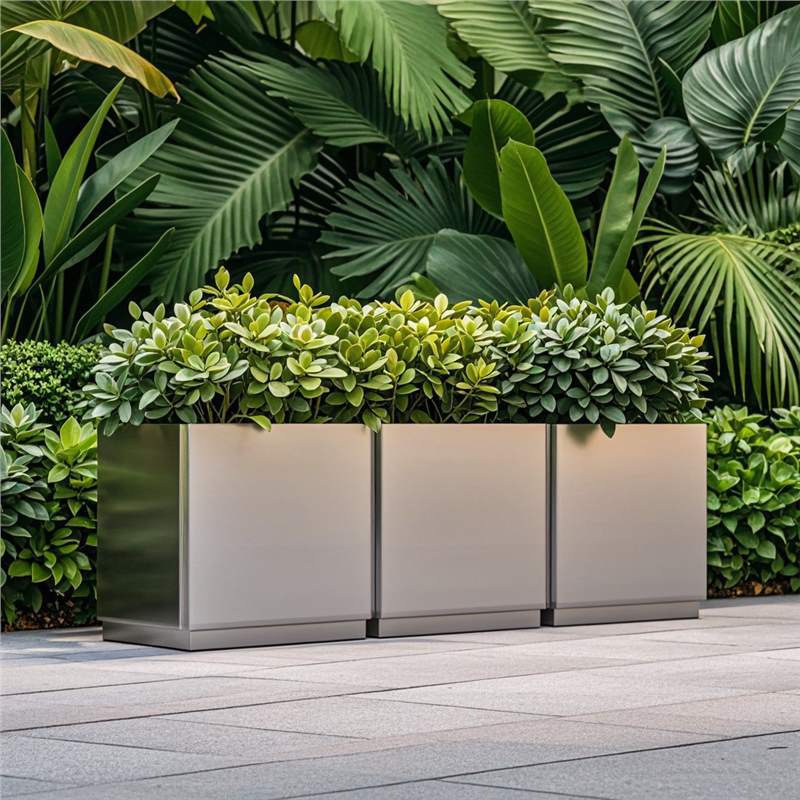
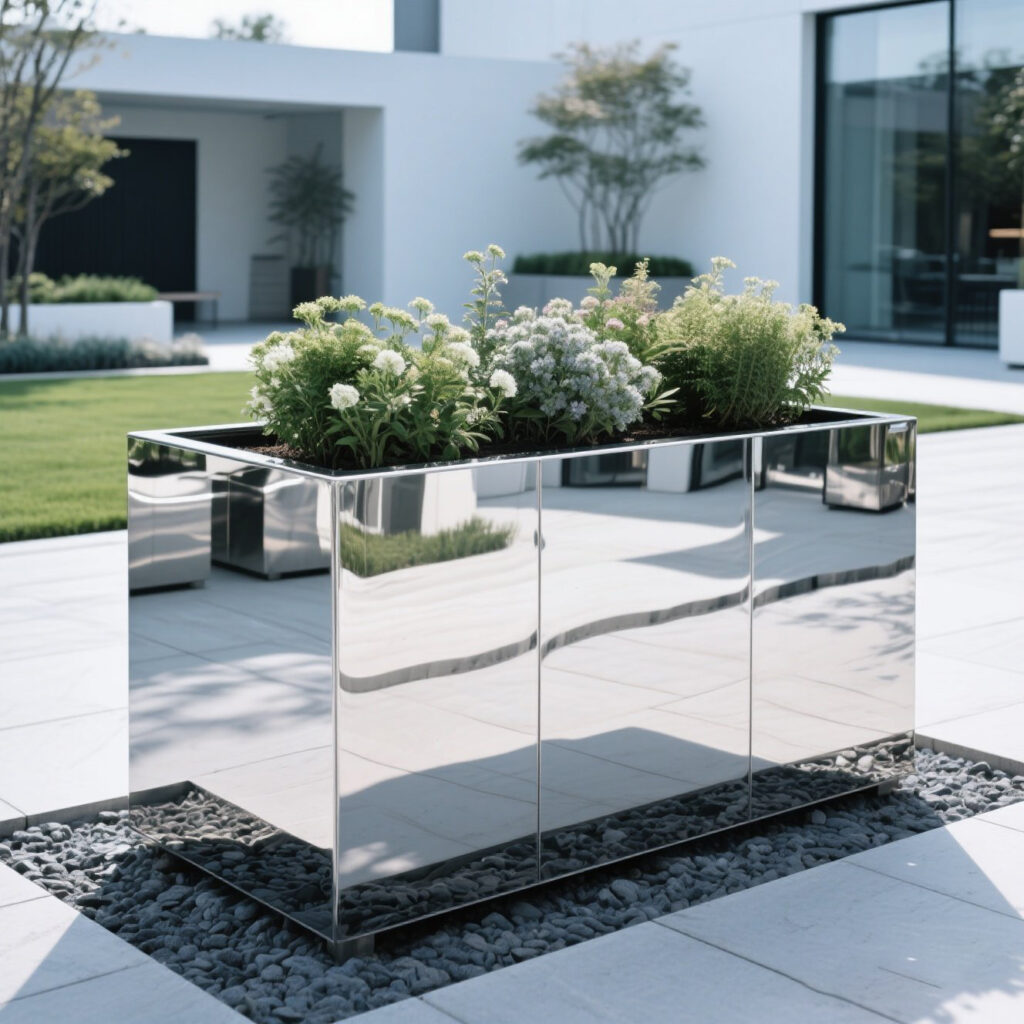
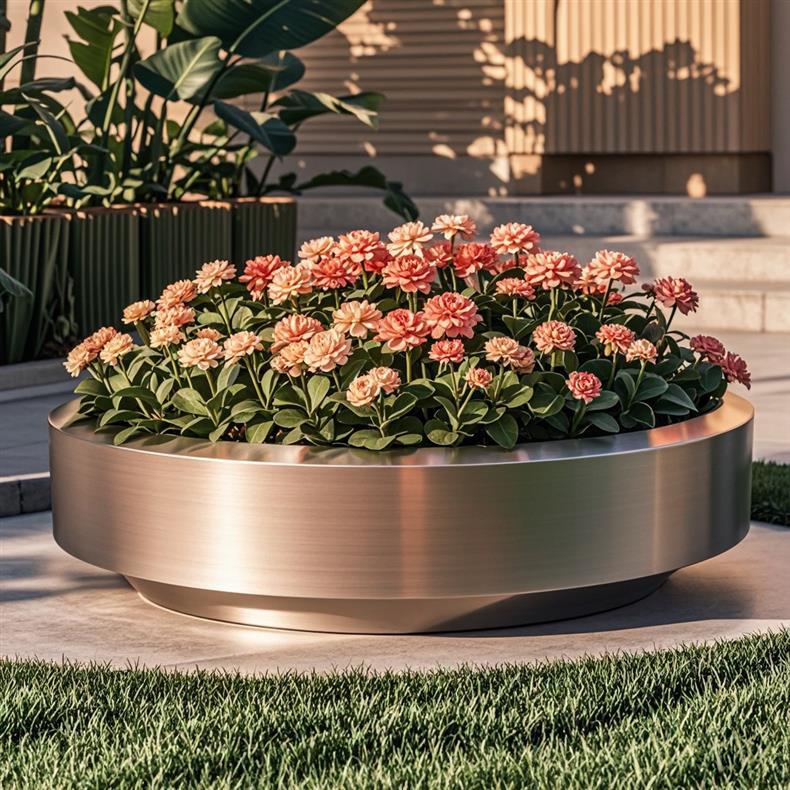
Stainless Steel Planter Pot Pros
Exceptional Weather Resistance and Long-Lasting Durability
304/316 stainless steel contains elements such as chromium and nickel, giving it excellent corrosion resistance. In outdoor environments exposed to salt spray, acid rain, and temperature fluctuations, high-quality stainless steel planters remain rust-free for extended periods, with an actual service life of 10–20 years or more.
In contrast, galvanized steel is prone to rapid rusting if the coating is damaged, while plastic planters typically degrade and crack after 3–5 years.
Superior Construction, Safe and Aesthetic
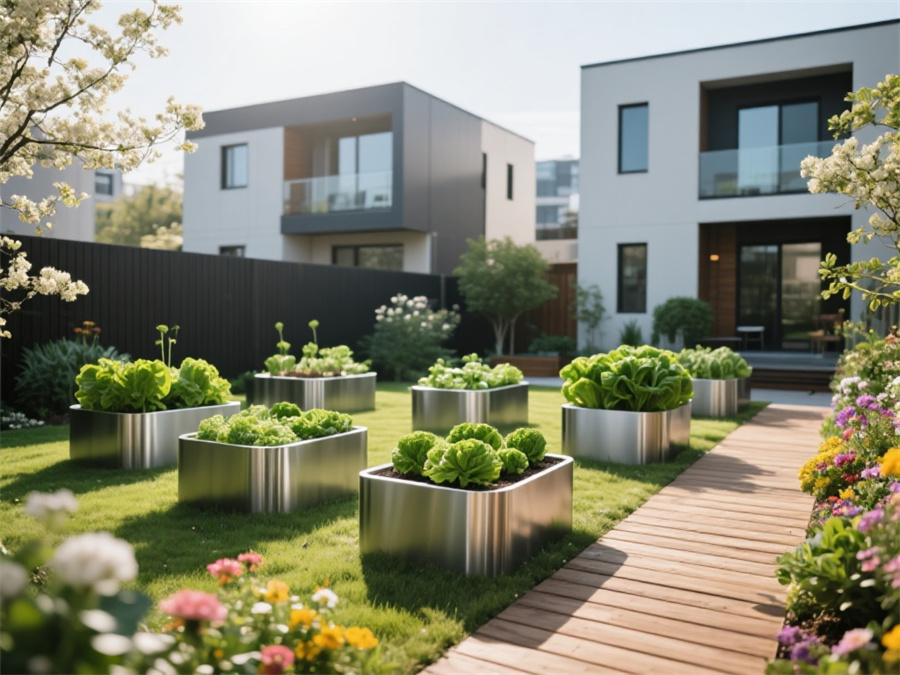
Stainless steel planter pots are high-density and durable, making them less prone to tipping over or breaking than plastic or ceramic planters.Sheets with a thickness of 1.2 mm or greater are recommended, combined with high-quality welding techniques (such as laser welding or automated welding machines), to ensure a stable and robust overall structure with no internal weak points. Surface finishes can include mirror-polished or brushed effects, or powder coating/spray painting in a variety of colors to suit modern, classical, and other design styles.
Easy to Clean: The smooth, flat surface of stainless steel has no micro-pores to trap dirt, the dust can be easily wiped away with a damp cloth—no special maintenance is required.
For example, silver steel planter used in shopping mall decor can be wiped clean to restore its original shine even after years of neglect. This level of cleanliness is unmatched by clay or plastic planters.
Highly Customizable, Wide Range of Options
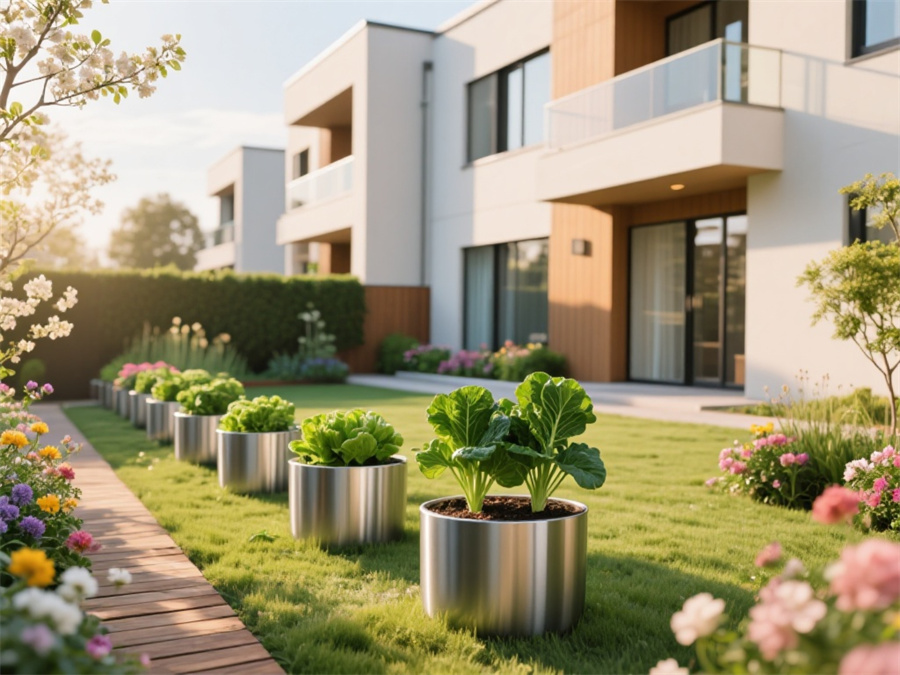
As a professional flower pot manufacturer and supplier, we offer personalized customization: dimensions, shapes, colors, and decorative patterns can all be tailored to your needs. For example, we can produce a variety of flower pots, including round, conical, oval, V-shaped, and irregular shapes. Surface finishes are available in mirror polish, brushed matte, or customized powder coating (red, black, antique bronze, rose gold, etc.).
For bulk production, we also offer laser-engraved logo services to support project branding. Throughout the customization process, our engineers will communicate with clients to understand their needs, design prototypes, and create samples to ensure the final product meets expectations.
Environmentally Friendly and Recyclable
Stainless steel is a 100% recyclable material; once discarded, it can be melted down and remanufactured, enabling the recycling of flower pots. The global steel recycling rate exceeds 90%, significantly higher than plastic (≈9%), aligning with sustainable development trends.
Although the unit price of 304/316 stainless steel planters is approximately 30% higher than that of ceramic planters of the same size, their long lifespan and reduced maintenance frequency result in a lower total cost of ownership over the long term. Additionally, they are lighter than ceramic (weighing about one-third as much for the same volume), reducing carbon emissions from handling and transportation.
Safe, Non-toxic, and widely Applicable
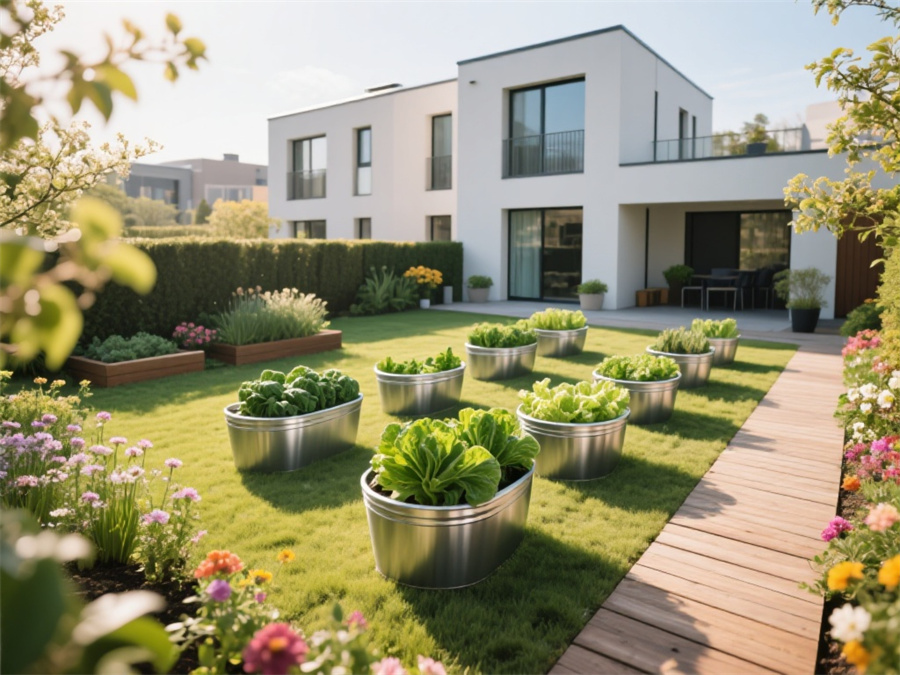
Made from food-grade 304/316 stainless steel, these planter pots have no risk of heavy metal leaching, making them safe for growing vegetables, herbs, and other edible plants. The high durability also makes them suitable for extreme outdoor environments and public spaces, such as amusement parks.
To prevent waterlogging and root rot, our planters are designed with optional drainage holes and trays, which help avoid plant damage caused by prolonged water accumulation.
It’s important to note that, regardless of the type of planter, we recommend ensuring good drainage and using the appropriate amount of soil, as well as regularly cleaning the leaves and watering moderately to keep your plants healthy and your planters looking clean.
Conclusion
Therefore, based on comprehensive considerations of durability, safety, eco-friendliness, and aesthetic customization, stainless steel planters become the preferred choice for urban landscapes, municipal greening, and residential settings.
FAQ about Stainless Steel Planter Box
Do stainless steel planter boxes rust? How to protect?
Made from 304/316 grade, stainless steel planter pots offer excellent corrosion resistance. Under normal conditions, the surface is unlikely to rust. If exposed to extreme chloride environments (such as salt spray near the coast) for extended periods, we recommend regularly cleaning the surface with clean water and applying a thin layer of anti-corrosion oil or fluorocarbon paint to the welds for enhanced protection. If minor rust spots appear, they can be removed by wiping with a stainless steel cleaner or white vinegar.
In general, keeping the surface clean and avoiding scratches from sharp objects will help maintain a rust-free, shiny finish for a long time.
What plants are suitable for stainless steel planter box?
Stainless steel is non-toxic and harmless, making it suitable for all types of potted plants. When used outdoors with large-flowered plants or those requiring frequent watering (such as cacti and palm bamboo), it fully utilizing its corrosion-resistant properties. Indoors, it is suitable for common foliage plants, succulents, and flower.
Due to the high thermal conductivity, the pots may heat up when placed in direct sunlight during the summer. It is recommended to position them in a shaded area or use heat-insulating mats or reflective film to lower the soil temperature and ensure the plants remain healthy.
How cost-effective are stainless steel planters compared to plastic or ceramic?
Although the unit cost of stainless steel planters is higher, they have a long service life (over 10 years) and do not need to be replaced frequently. From a long-term cost perspective, the annualized cost is actually lower than that of plastic or ceramic planters.