
In planter landscape design and architectural projects, selecting materials that combine aesthetics, durability, cost-effectiveness, and environmental impact has become crucial. Many common planter pot materials are prone to damage in outdoor situations, requiring frequent refurbishment and extra costs. Corten steel is known for its distinctive weathering patina effect, while aluminum is known for its lightweight and modern appearance, represent two of the most popular and high-performing choices available today.
Corten steel and aluminum offer distinct advantages and disadvantages that make them suitable for different applications and priorities.
Corten vs Aluminum Planters
Material Comparison
Corten Steel
Corten steel utilizes a copper-chromium-nickel alloy to form a stable, self-healing rust layer of 50-100μm when exposed to weather. This layer acts as a barrier, preventing the deep corrosion common in carbon steel. Its corrosion rate is only 1/8th that of ordinary steel, with a lifespan exceeding 30 years.
Aluminum
When exposed to air, aluminum instantly reacts with oxygen to form a thin, hard, transparent layer of aluminum oxide on its surface, creating a protective barrier that prevents further oxidation and corrosion.
Aluminum planters, treated with anodizing or powder coating, develop a protective film. They are only 60% the weight of stainless steel and will last 25+ years, emphasizing lightness and a modern aesthetic.
Appearance and Texture
Corten Steel Planter
Corten steel is known for its unique, rustic, and weathered appearance. It is not a static finish but a living surface that evolves and deepens with age and exposure, offering a unique, dynamic beauty.
Aluminum Planters
Aluminum planters typically maintain a smooth silver-gray or powder-coated finish, with clean edges, polished surfaces, and precise geometric forms,suited for modern, minimalist, and formal landscape designs.
Due to the versatility of powder coating,aluminum planters can be finished in a virtually limitless spectrum of colors.


Corrosion Resistance
Corten Steel Planters
Corten steel is a type of “weathering steel” designed to resist corrosion. Its alloy elements promote the formation of a dense, rust-like oxide layer on the surface to protect the underlying metal from further corrosion. This self-passivation process ensures that corten steel planters remain resistant to erosion even when exposed to wind, sun, rain, and snow for extended periods.
Corten steel’s defining feature is its self-protecting rust-like patina, which forms over time and inhibits deeper corrosion, granting it a potential lifespan of several decades to over a century.
Aluminum Planter
Aluminum itself does not rust (the oxide film formed on aluminum also provides corrosion resistance), making aluminum planters inherently corrosion-resistant. However, aluminum is relatively soft and prone to deformation under impact. Without protective coatings, surface oxidation may occur with long-term exposure to intense sunlight (which can be mitigated through anodizing or powder coating).
Aluminum naturally forms a passive, transparent layer of aluminum oxide that protects it from rust, with powder coating offering further protection and aesthetic versatility. In highly saline coastal environments, marine-grade aluminum may offer superior performance.
Maintenance Costs
Corten Steel Planter
One of the primary advantages of Corten steel planters is the elimination of routine painting and rustproofing requirements. Once the Corten patina has stabilised, the planter requires almost no maintenance to ensure its structural longevity. The protective rust layer is self-healing and regenerative. There is no paint to chip, no coating to peel.
The only “maintenance” is occasional cleaning if desired, perhaps to remove other surface debris, which can be done with water and a soft brush.
Aluminum Planters
Aluminum planters typically require powder coating or anodizing to prevent fading and surface degradation. While aluminum offers high corrosion resistance, damaged coatings need recoating to maintain appearance and durability.
Powder-coated aluminum is also very low-maintenance. Its primary need is periodic cleaning to maintain its appearance. Dust, pollen, and pollution can accumulate on the surface over time. This can typically be cleaned with a mild soap and water solution.
Durability and Lifespan
Corten Steel Planter Pot
Thanks to its regenerative patina, Corten steel is built for extreme longevity. In suitable environments with proper wet/dry cycling, a well-designed Corten steel planter can easily last for many decades, with numerous sources citing lifespans of 40 to 100 years or even more. Its resistance to severe conditions like rain, snow, UV exposure, and temperature fluctuations is outstanding
Aluminum Planters
A high-quality, powder-coated aluminum planter is also highly durable and resistant to weather. It will not rust and is impervious to moisture. Its lifespan is largely determined by the longevity of its powder-coated finish.Premium powder coating can last for 15-20 years or more before it might show signs of fading or chalking, especially under intense UV exposure, but the powder coat can be scratched or chipped by sharp objects or significant impacts; significant damage to powder coated may require touch-ups or eventual refinishing to maintain the desired aesthetic.
Heavy-duty corten planters offer greater stability for supporting large plants and withstanding environmental impacts, while thinner aluminum planters may be slightly less resistant to long-term impacts.
Corten vs Aluminum Planters: Which Is Better for Outdoor Use?
Due to their exceptional corrosion resistance and durability, corten steel and aluminum are the preferred materials for outdoor planters.
Corten Steel
Corten steel has a low thermal conductivity, transferring heat slowly and cushioning sudden fluctuations in external temperatures.This lower conductivity means that a Corten steel planter provides significantly more insulation for the soil within. It will heat up more slowly in the sun and lose its heat more slowly at night, creating a more stable and moderated temperature environment for plant roots.
Similarly, during cold periods, Corten planters release heat more gradually, giving plants more time to adjust and reducing the risk of sudden, damaging root freezing.
Aluminum
Under high temperatures, heat rapidly transfers through aluminum planters into the surrounding soil, scorching and killing delicate feeder roots,stressing plants, increasing water consumption, and making them more susceptible to pests and diseases.
Similarly, during sudden frosts or extended freezes, aluminum planters rapidly release heat into the cold air, rapidly cooling the entire soil mass. This can cause root balls to freeze, which is detrimental to many less cold-hardy perennials.
Due to environmental considerations, aluminum planters are more suitable for regions with moderate climates, while corten steel is better suited for outdoor use.
Drainage
Corten steel and aluminum planters are typically designed with optional drainage hole at the bottom, can also be customized as required.

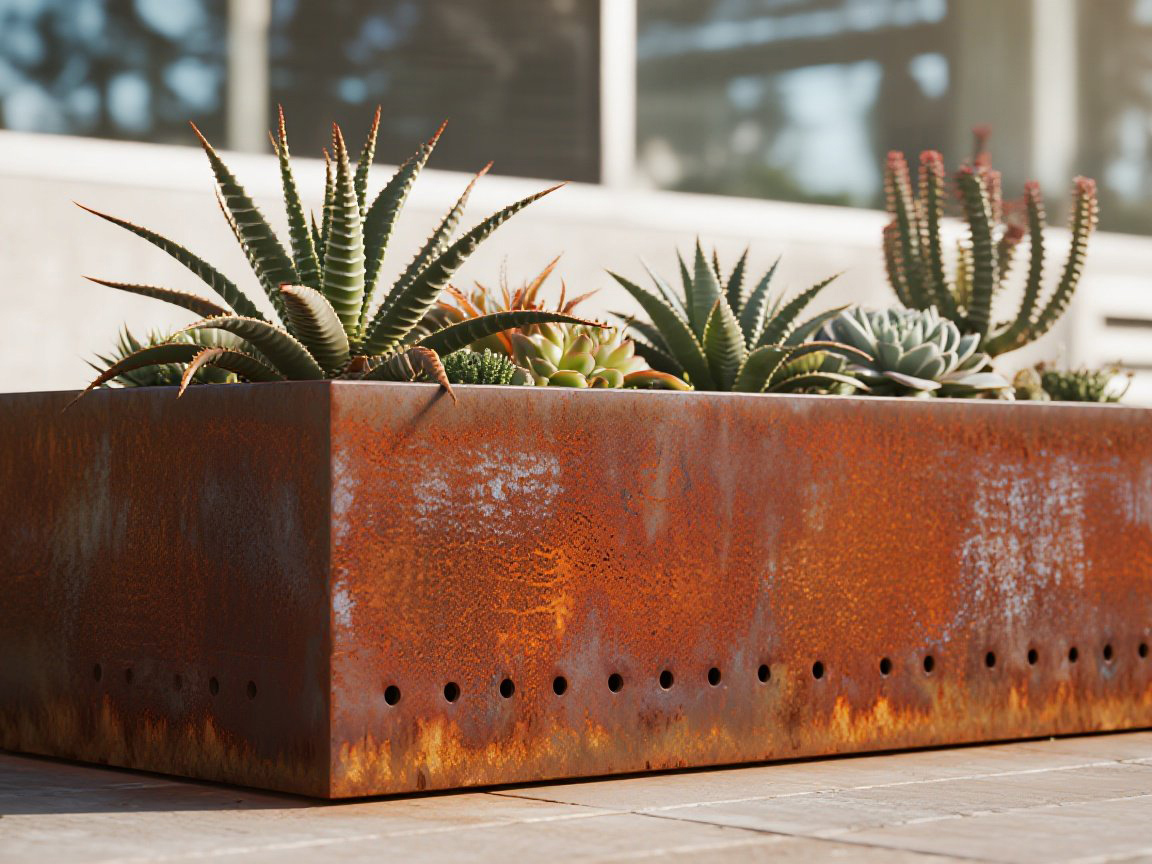
Precautions for using corten steel planters:
As the loose, unstable rust forms in the first months to a year, rainwater running off the corten planter’s surface can carry rust particles and deposit them onto adjacent materials. Mitigation strategies include:
- Allowing the planters to weather in a separate location before final installation.
- Designing a gravel or mulch bed around the base of the planter to catch runoff.
- Elevating the planter slightly on feet or a separate base to prevent direct contact with the finished surface.
- Selecting surrounding materials that will not be visibly stained.